
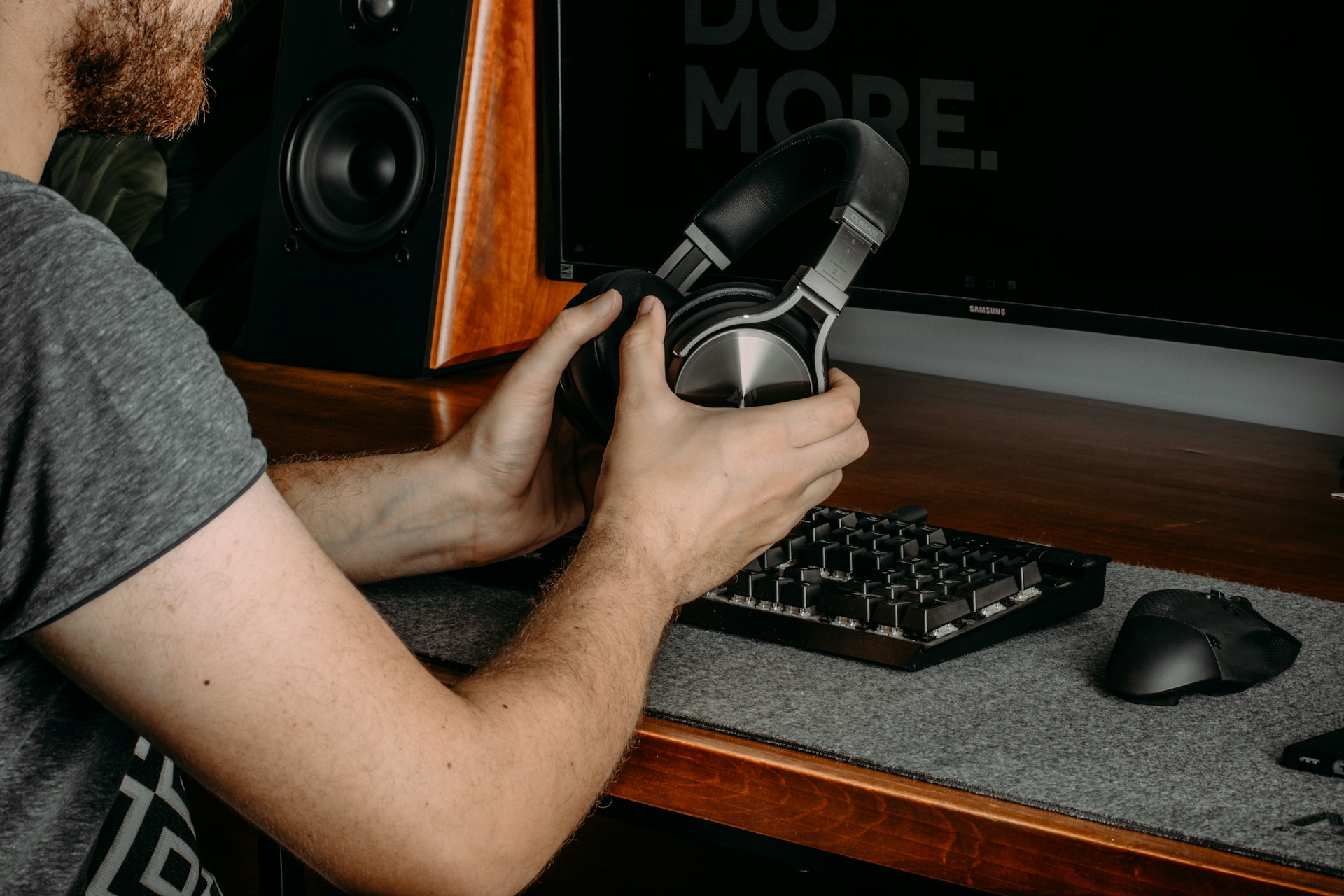
The idea of an ambient focus workspace grows out of a simple observation: concentration rarely emerges from effort alone. It is influenced just as much by the environment that surrounds you — the textures under your hands, the height of the tools you use, the quietness of the surface, the rhythm created by how objects settle into place. When the desk forms a subtle atmosphere rather than a strict layout, attention becomes something that flows instead of something that must be forced.
Ambient focus does not mean background noise or decorative lighting. It means shaping a workspace where every object contributes to a gentle sense of calm, allowing the mind to rest more easily on the task at hand. This kind of atmosphere is built slowly, through materials chosen intentionally, through stable forms, and through the small rituals that emerge around everyday tools.
When a desk supports ambient focus, the pace of the day shifts. You feel less reactive, more grounded, and more aware of how your surroundings influence your thinking. The workspace becomes part of the work rather than a container for it.
Ambient focus workspace – a desk shaped by mood as much as function
A ambient focus workspace responds to the emotional side of working as much as the practical side. Instead of designing around efficiency alone, it considers how a surface affects posture, how a material affects touch, and how an object’s stability affects the rhythm of the day.
Warm tones create a sense of presence without distraction. Solid materials bring weight that steadies movement. Clear edges define the working area without feeling rigid. Together, these elements form an atmosphere that encourages deeper engagement.
In this kind of workspace, attention settles gradually. You sit down, place your tools where they feel natural, and let the environment guide you into a quieter mental state. Tasks become easier to enter because the desk acts as a buffer against noise — not literal noise, but the noise created by clutter, by instability, by visual confusion.
Mood becomes part of the workflow
The desk doesn’t demand discipline; it gives you a place to rest your attention.
A landscape built through subtle layers
The structure of an ambient-driven desk is rarely flat. Height influences focus far more than people realise. A raised platform for screens shifts attention upward, freeing the lower surface for writing and planning. A soft textured mat beneath the wrists reduces harsh sounds and encourages steady hand movement.
Each layer contributes to a sense of order that isn’t imposed but emerges naturally. You find yourself using the desk in zones: one area for quick thoughts, another for long sessions at the keyboard, another for items that rest quietly until needed. These layers do not need to be labelled or separated physically; the atmosphere itself defines them.
This layering brings a gentle clarity. When tools live on different levels, your eyes navigate the desk more calmly. Focus builds because your surroundings guide your actions instead of scattering them.
Height and texture create direction
The workspace becomes a small landscape rather than a flat surface full of interruptions.

Ambient focus workspace – the role of silence in shaping attention
Silence on a desk isn’t the absence of sound; it’s the absence of sharpness. Hard surfaces amplify every small impact — a pen set down too quickly, a phone placed with a tap, a keyboard shifted across the wood. Softened materials turn these into muted gestures, reducing tension across long hours.
In a ambient focus workspace, silence is created through touch. Felt absorbs energy, cork steadies movement, and wood softens visual contrast. Each material creates a form of quiet that helps the mind hold a thread of thought for longer.
When sound becomes duller, work feels less urgent. You don’t rush, because nothing around you rushes. The desk sets a pace that feels sustainable. You sense time differently — not slower, but fuller.
Softness becomes a foundation
When gestures quieten, thinking becomes clearer.
How atmosphere guides transitions throughout the day
Many people lose focus not during tasks, but during transitions — the moments when shifting from one responsibility to another leaves the mind scattered. An ambient-oriented setup softens these transitions by giving the desk visual anchors.
A warm wooden line draws attention gently. A dedicated area for a device keeps movement predictable. A raised platform invites a moment of reset each time you return to the screen. These cues create a rhythm that supports sustained attention across changing tasks.
With time, this rhythm becomes instinctive. You reach for tools at the same angle, return them to the same quiet region, and feel the desk subtly shaping the order of your thoughts. Instead of resisting change, you glide through it.
Small anchors prevent cognitive drift
When the desk behaves consistently, you follow suit.
Ambient focus workspace – balancing atmosphere with practicality
An atmosphere-driven desk must still be functional. The beauty of an ambient focus workspace is that it never sacrifices function for calmness. It simply removes unnecessary friction.
Stable stands hold devices at the right height. The surface remains clear enough for writing without feeling empty. Tools sit within reach but not in the centre of your visual field. Cable openings, raised structures, weighty materials — all of these contribute to an environment that quietly supports every task.
Practicality becomes less about storage and more about flow. You no longer spend time shifting objects out of your way because the desk naturally guides them to places where they belong.
Function hides inside atmosphere
You gain order without feeling restricted by it.
A workspace that adapts without losing its centre
The power of ambient-based design lies in its adaptability. It does not demand a specific routine; it responds to whatever routine you bring.
On busy days, the desk becomes a steady surface that keeps your pace manageable. On slow days, it becomes a warm environment for thinking. When tasks change suddenly, the atmosphere absorbs the shift without becoming chaotic.
Because the system relies on mood rather than rules, it remains flexible as your workflow evolves. The one constant is calmness — the desk holds it, even when you do not.
Adaptation without effort
The environment adjusts so your attention doesn’t scatter.
Ambient focus workspace – a clearer mind shaped by the quietness of the desk
The longer you work within an ambient-focused environment, the more you notice its influence. Your thoughts stretch further. Your gestures slow down. You return to tasks more easily after pauses.
The desk becomes a companion in concentration rather than a surface full of competing signals. This shift is subtle but transformative. It encourages work that feels sustainable and meaningful, not rushed or fragmented.
By removing friction, the desk offers something rare: space to think clearly. In a world full of rapid switching and constant noise, that clarity becomes a kind of strength.
An ambient focus workspace isn’t merely an aesthetic choice. It’s a way of shaping the conditions in which good work can happen — naturally, calmly and with a pace that supports the mind instead of overwhelming it.
